Developer finance for
modular residential projects
Construction finance built for developers using modern methods of construction. FYNX understands factory production timelines, modular delivery logistics, and capital stack complexity — not just property collateral and presale coverage.
The developer finance problems modular projects actually face
There is no shortage of capital in Australian development finance. Banks, private credit, mezzanine providers — the market is active. But almost none of it is built around the specific realities of modular delivery. These are the problems developers actually hit.
Presale hurdles that don't fit modular exit strategies
Banks historically targeted 100% presale coverage for development debt. APRA clarified in 2025 that this is market practice, not a prudential minimum — but bank behaviour hasn't changed. Modular projects with faster delivery can support different exit logic, but standard underwriting doesn't recognise it.
Slow approvals when factory slots are on the clock
Factory production is scheduled. A 6-week bank credit process can push your project into a later production window, adding months. When your delivery advantage is speed, your finance can't be the bottleneck.
Underwriting models blind to off-site delivery
Most development lenders treat modular projects like conventional builds — same draw schedules, same monitoring, same milestones. They don't account for factory production risk, manufacturer concentration, or parallel site and off-site timelines.
Capital stack complexity with limited options
Smaller developers often need more than senior debt — mezzanine, preferred equity, residual stock finance. Finding these layers from providers who understand modular delivery adds another level of friction.
Short tenors on land and pre-development
Land facilities and pre-development loans are often short-dated, creating refinancing risk before you even start building. For modular projects with planning complexity, this creates unnecessary pressure.
Weak feasibility under current cost/finance pressure
Construction costs have risen. Finance costs remain elevated. Feasibility margins are tight. Modular delivery can improve the cost equation — but only if the finance structure recognises the delivery advantage.

Not another private credit provider with a construction add-on
The Australian development finance market has strong players — private credit managers, specialist non-bank lenders, development finance brokers. They're generally good at capital stack structuring, commercial underwriting, and speed versus banks.
But they are generally weaker at modular-native underwriting, factory-side milestone finance, digital borrower experience, and integrated project monitoring that tracks production data rather than just site inspections.
FYNX is purpose-built for this gap — specialist developer finance that speaks the language of off-site manufacturing, not just property collateral.
Standard Development Finance
- Property-as-collateral focused
- Traditional site milestones for draws
- Generic construction monitoring
- Presale-heavy underwriting
- Manual, broker-dependent process
- No factory-side visibility
FYNX Developer Finance
- Modular-aware underwriting from day one
- Factory-aligned draw schedules
- Production data-driven monitoring
- Flexible presale logic for modular exits
- Digital origination and milestone tracking
- Manufacturer accreditation and risk scoring
Structured finance for modular development
FYNX Develop
Construction finance
Senior construction finance with modular-aware milestone schedules, factory monitoring, and draw controls aligned to off-site production.
- Land + construction or construction-only
- Modular-aligned draw schedules
- Factory progress monitoring
- Flexible presale approaches where justified
FYNX Stack
Capital structuring
Layered capital solutions for developers who need more than senior debt. Structured finance across the capital stack.
- Senior debt placement
- Mezzanine and preferred equity
- Residual stock and take-out support
- Capital partner network access
FYNX Community
Affordable & social housing
Specialist finance for modular affordable, social, and community housing projects — including those with government-linked capital or institutional partnerships.
- Blended capital support
- NHIF and AHBA-aware structuring
- Community housing provider partnerships
- Regional workforce housing
The numbers behind the opportunity
Australia is structurally undersupplied. Modular construction offers genuine speed and productivity advantages. Government policy is moving in this direction. But the developer finance market hasn't specialised around it yet.
That's the gap FYNX is designed to fill — and these are the numbers that frame it.
dwellings completed in 2024 against ~223,000 underlying demand
NHSAC 2025
potential reduction in build times with modular construction methods
NHSAC / overseas evidence
typical maximum LVR observed in bank development lending
APRA CRE review
in federal and state government funding for modern methods of construction
prefabAUS 2025
What kinds of projects FYNX is designed for
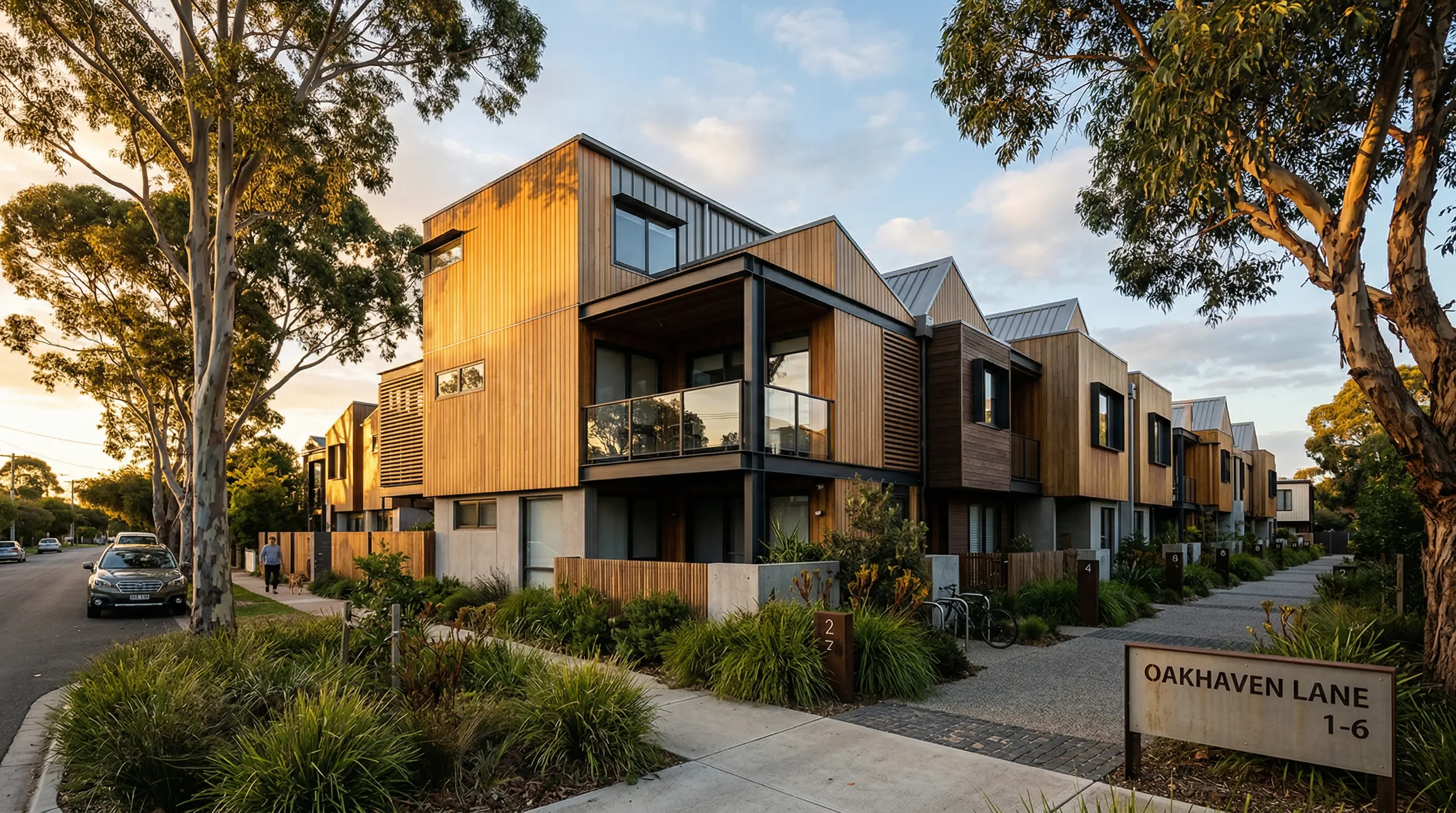
Modular townhouses
Infill and greenfield modular townhouse developments. 3–50+ dwellings.
Affordable housing
Social and affordable modular projects, including government-linked programs and NHIF-backed developments.
Regional housing
Workforce and regional housing where modular delivery solves logistics and labour challenges.
Medium density
Walk-up apartments and medium-density modular residential projects.
Mixed-use modular
Ground-floor commercial with modular residential above, where the numbers work.
Build-to-rent
Institutional-quality modular BTR projects with long-term income focus.
Building a single prefab home? See prefab home finance → · Want to understand the process? How it works →
Discuss your modular development
Tell us about your project — site, delivery model, timeline, and capital requirements. A FYNX specialist will review and come back with an informed view of how we can help.
Confidential. No obligation. Specialist construction finance expertise from the first conversation.
Questions? Read the FAQ →